Source semi automatic camping pocket knife for hunting, outdoor, and garden
Compare 30 semi automatic camping pocket knife options from verified Chinese manufacturers. These multifunction tools feature stainless steel blades and anodized aluminum handles, suitable for hunting, camping, and garden tasks with customizable branding.
Key considerations
Products List
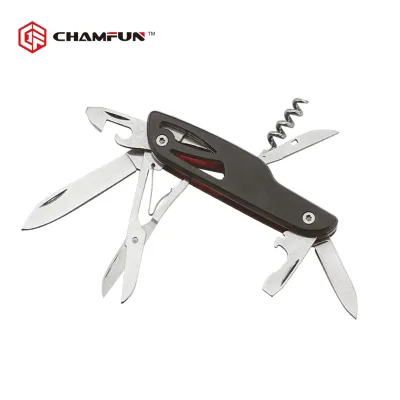


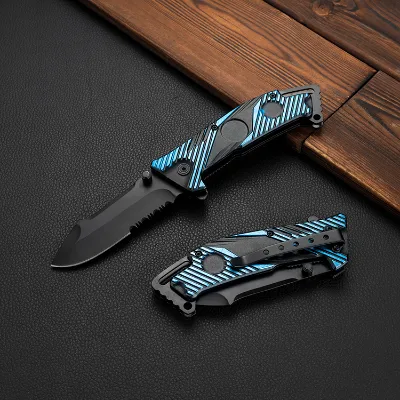


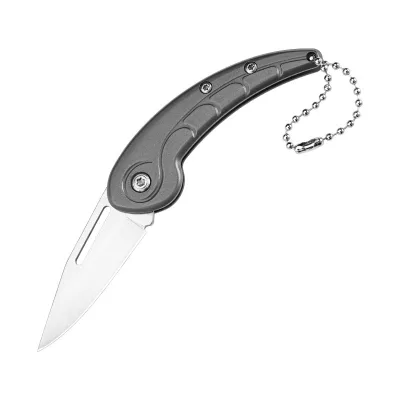


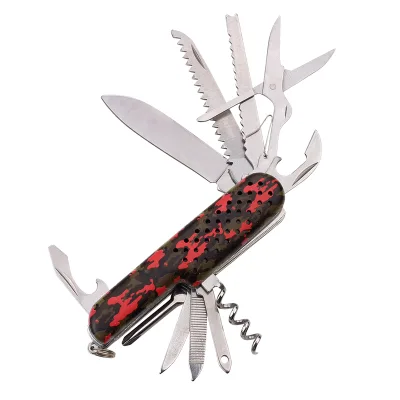

Comprehensive Sourcing Guide
Strategic Sourcing Guide for Semi-Automatic Camping Pocket Knives
Understanding Product Specifications and Technical Variability
When sourcing semi-automatic camping pocket knives, buyers must first navigate a landscape of diverse technical specifications that define the utility and safety of the tool. The core keyword implies a mechanism for rapid deployment, yet the actual product data reveals a spectrum of configurations ranging from standard folding mechanisms to specialized combat and hunting variants. The observed product count of 30 distinct items indicates a market rich in options, but also one where precise specification matching is critical to avoid procurement errors.
Technical attributes vary significantly across the catalog. For instance, blade materials are primarily constructed from stainless steel alloys, with specific observations noting 2Cr13 for accessories and 3Cr13 for the primary blade. These material grades suggest a focus on corrosion resistance and edge retention suitable for outdoor environments. However, the data also lists "Stainless Steel" as a handle material for certain models, which is a distinct deviation from the more common aluminum or polymer handles found in typical pocket knives. This variance requires buyers to verify the intended use case, as a stainless steel handle may offer durability but could impact the overall weight and thermal conductivity in extreme cold.
Dimensions and weight are equally critical for camping applications where every gram counts. The observed specifications show a wide range of lengths, from a compact 10.0 cm closed size to extended lengths of 212 mm. Correspondingly, weights fluctuate between 99g and 140g. A specific model, identified by the model number CK308AL-7, features an aluminum anodized handle and a blade length of 1 1/2 inches, weighing 140g. In contrast, other models like the CB059 are noted with a standard of 4.5 inches and a weight of 99g. The thickness of the blade also varies, with observations ranging from 2.3mm to 3mm. Thicker blades (3mm) generally offer higher structural integrity for heavy-duty tasks like batoning wood, while thinner profiles (2.3mm) may provide better slicing performance for food preparation.
The following table summarizes the key technical observations found in the current market data to assist in specification comparison:
| Attribute | Observation A (Model CK308AL-7) | Observation B (Model CB015) | Observation C (Model CB059) |
|---|---|---|---|
| Blade Material | Stainless Steel 3Cr13 | Stainless Steel (Implied) | Stainless Steel (Implied) |
| Handle Material | Aluminium Anodized | Stainless Steel | Not Specified |
| Total Length | 178mm | 212mm | 210mm |
| Blade Length | 1 1/2 inches | Not Specified | Not Specified |
| Thickness | 2.3mm | 2.8mm | 3mm |
| Weight | 140g | 120g | 99g |
| Finish | Black Plating | Titanium Plating | Not Specified |
| Standard Size | 7 inches | 8.3 inches | 4.5 inches |
Buyers must treat these figures as observations of specific SKUs rather than universal standards for all "semi-automatic" knives. The presence of different finishes, such as black plating and titanium plating, suggests options for aesthetic customization or specific environmental resistance, which should be verified against the intended operational environment.
Compliance, Certification, and Regulatory Verification
In the B2B procurement of cutting tools, particularly those with semi-automatic mechanisms, compliance and certification are paramount. While the provided data does not explicitly confirm the certification status of every listed product, it references background standards such as ISO 9001 and BSCI. These are high-level management system certifications that indicate a supplier's commitment to quality management and social responsibility, respectively. However, the presence of these standards in background knowledge does not automatically validate that a specific knife model has passed rigorous safety testing or meets local import regulations.
Buyers must exercise caution when interpreting certification claims. The data lists "Condition: New" and "Folding: Folded," which are product states rather than regulatory approvals. For semi-automatic knives, regulatory compliance often involves adherence to local laws regarding blade length, locking mechanisms, and the definition of "automatic" versus "assisted" opening. In many jurisdictions, the legal status of a knife depends on whether the blade deploys via a spring-loaded mechanism (often restricted) or a manual assist. The term "semi-automatic" in the core keyword can be ambiguous; some manufacturers may classify a knife with a spring assist as semi-automatic, while others may reserve the term for push-button deployment.
When evaluating suppliers, buyers should request specific documentation regarding the product standard. The observed data mentions "prod_standard" values like "7 inches," "8.3 inches," and "4.5 inches." These likely refer to the legal or functional length standards used by the manufacturer for classification, but they do not guarantee compliance with the destination country's import laws. For example, a knife with a 7-inch standard might be legal in one market but prohibited in another. Therefore, the procurement strategy must include a verification step where the buyer confirms the specific legal classification of the knife in their target market.
Furthermore, the mention of "OEM" and "Customization: Available" implies that branding and specific feature sets can be altered. This flexibility is a double-edged sword for compliance. Customization could inadvertently change the product's classification or safety features. Buyers must ensure that any custom logo application or handle modification does not compromise the structural integrity or safety locking mechanisms required by safety standards. While the data does not list specific test results or performance claims, the expectation for a B2B buyer is to demand third-party test reports for locking mechanisms, blade hardness, and corrosion resistance before finalizing an order.
Cost Drivers and Pricing Dynamics
The pricing structure for semi-automatic camping pocket knives is influenced by a complex interplay of material costs, manufacturing processes, and order volume. The observed listed price range in the current market data spans from $0.40 to $19.99 USD. This wide disparity indicates that the market includes both low-cost promotional items and higher-end tactical or premium camping tools. Understanding the drivers behind this range is essential for budgeting and value assessment.
Material composition is a primary cost driver. The data highlights the use of Stainless Steel 3Cr13 for blades and Aluminium Anodized for handles in specific models. The anodization process adds value by improving corrosion resistance and allowing for color customization, which likely contributes to the higher end of the price spectrum. Conversely, models utilizing stainless steel for handles or simpler finishes may fall into the lower price brackets. The thickness of the blade also plays a role; a 3mm blade requires more raw material and potentially more complex grinding processes than a 2.3mm profile, influencing the unit cost.
Manufacturing location and logistics are secondary but significant factors. All observed products originate from Guangdong, China, a major hub for knife manufacturing. The proximity to raw material suppliers and established supply chains in this region generally keeps base production costs competitive. However, the "Payment term: T/T30% deposit, pay the balance against fax copy of B/L" indicates a standard international trade practice that affects cash flow and risk management for the buyer. The Minimum Order Quantity (MOQ) ranges from 99 to 2000 units. This variation suggests that smaller suppliers or those offering highly customized OEM services may have lower entry barriers, while larger volume manufacturers require substantial commitments to achieve the lowest per-unit price.
The "Selling Units: Single item" attribute suggests that the pricing data reflects individual unit costs, which can be misleading for bulk procurement. Buyers should be aware that the $0.40 figure likely represents a bulk rate for a basic promotional knife, whereas the $19.99 figure may correspond to a premium model with specialized features like titanium plating or specific tactical configurations. The "Single gross weight" of 0.200 kg and "Single package size" of 11x3.2x2.4 cm are critical for calculating freight costs. Even small variations in packaging dimensions can significantly impact shipping expenses, especially when shipping to multiple international destinations.
Typical Applications and Usage Scenarios
The versatility of semi-automatic camping pocket knives makes them suitable for a broad range of applications, as evidenced by the diverse usage tags in the product data. The observed applications include "Combat Knife," "Hunting Knife," "Multi Functional Knife," and "Camping Knife." This classification highlights the dual nature of these tools: they serve both recreational outdoor enthusiasts and professionals requiring reliable cutting instruments in high-stakes environments.
For camping and outdoor activities, the "Multifunction" aspect is particularly valuable. The data notes applications in "garden" and "hunting" contexts, suggesting that these knives are designed to handle tasks ranging from food preparation and rope cutting to wood processing and self-defense. The "Black Plating" and "Titanium Plating" finishes observed in the data are not merely aesthetic; they often serve functional purposes such as reducing glare in tactical situations or enhancing resistance to moisture and salt spray in marine or coastal camping environments.
The "Folding" attribute is a key design feature for camping applications, as it ensures portability and safety during transport. A folded knife with a closed size of 10.0 cm fits easily into a pocket or a small pouch, making it an ideal companion for hikers and campers who need to keep their hands free. However, the "Combat Knife" designation implies a need for a robust locking mechanism to prevent accidental closure during use. Buyers must verify that the semi-automatic mechanism provides a secure lock in the open position, as a failure in this mechanism could lead to serious injury.
The "Customization: Available" and "OEM" attributes indicate that these knives can be tailored for specific group needs. For instance, a hunting club might request a specific blade length or handle color to distinguish their gear. Similarly, corporate gifts or promotional items often utilize the "Different colors available" option to align with brand identity. The "Carton" packing method suggests that these products are shipped in bulk, ready for distribution to retailers or direct to end-users. Understanding these application nuances helps buyers select the right product variant for their specific customer base, whether it is a tactical gear retailer, a sporting goods store, or a promotional merchandise distributor.
Supplier Evaluation and Selection Criteria
Selecting the right supplier for semi-automatic camping pocket knives requires a rigorous evaluation process that goes beyond price comparison. With 30 products observed and a clear origin in Guangdong, China, buyers face a competitive market with numerous potential partners. The key to successful sourcing lies in assessing the supplier's ability to meet specific technical and operational requirements.
First, verify the supplier's capacity for customization. The data confirms that "Logo: OEM" and "Customization: Available" are standard offerings. However, the extent of this customization varies. Some suppliers may only offer simple logo engraving, while others might accommodate changes in handle material or blade geometry. Buyers should request samples of previous OEM work to assess the quality of branding and the precision of manufacturing.
Second, evaluate the consistency of product quality. The observed data shows significant variation in specifications, such as blade thickness ranging from 2.3mm to 3mm and weights from 99g to 140g. This variability could indicate a single supplier offering a wide range of models or a marketplace aggregating products from multiple factories. Buyers must clarify whether they are dealing with a single manufacturer or a trading company. If the latter, the risk of quality inconsistency increases. Requesting a "Finished" sample with the specific plating (Black or Titanium) is essential to verify the quality of the surface treatment and the durability of the finish.
Third, assess the supplier's compliance with payment and shipping terms. The standard payment term observed is "T/T30% deposit, pay the balance against fax copy of B/L." This is a common practice in international trade but requires trust and clear communication. Buyers should ensure that the supplier has a reliable track record of shipping and that the Bill of Lading (B/L) process is handled efficiently to avoid delays. Additionally, the "Place of Origin: Guangdong, China" should be confirmed on all commercial documents to ensure transparency and avoid any potential trade barriers related to country of origin labeling.
Finally, consider the supplier's responsiveness to quality control inquiries. The data mentions "ISO 9001" and "BSCI" as background standards, but these are not explicitly confirmed for every product. Buyers should ask for current certification documents and audit reports to ensure the supplier adheres to international quality and social responsibility standards. A supplier that is transparent about their certifications and willing to undergo third-party inspections is more likely to deliver consistent, high-quality products.
Quality Control and Long-Term Procurement Considerations
Implementing a robust quality control (QC) strategy is essential for mitigating risks associated with sourcing semi-automatic camping pocket knives. Given the mechanical nature of these tools, the primary focus of QC should be on the locking mechanism, blade integrity, and finish durability. The "Folding" and "Semi-automatic" features introduce potential points of failure that must be tested rigorously.
Buyers should establish a clear QC protocol that includes functional testing of the deployment mechanism. This involves verifying that the semi-automatic action is smooth and reliable, and that the lock engages securely to prevent accidental closure. The "Thickness" of the blade, observed between 2.3mm and 3mm, should be measured to ensure it meets the specified tolerance. Deviations in thickness can affect the blade's strength and edge retention. Additionally, the "Blade Material" (3Cr13 or 2Cr13) should be verified through material analysis or supplier certification to ensure the steel grade matches the order specifications.
Long-term procurement considerations involve building a sustainable supply chain that can adapt to market changes. The "Customization" and "OEM" capabilities of the supplier are valuable assets for maintaining a competitive edge. However, buyers must ensure that these capabilities do not compromise the core quality of the product. Regular audits and sample inspections should be scheduled to maintain consistency over time. The "Carton" packing method should be evaluated for its ability to protect the knives during transit, especially given the sharp edges and delicate mechanisms involved.
Furthermore, buyers should monitor the "Lead time" and "MOQ" dynamics closely. The observed MOQ range of 99 to 2000 units suggests flexibility, but buyers should negotiate terms that allow for smaller, more frequent orders if market demand fluctuates. The "Payment term" structure should be reviewed periodically to optimize cash flow. Finally, maintaining open communication with the supplier regarding any changes in standards or regulations is crucial. As the market for outdoor and tactical gear evolves, the ability to adapt product specifications to meet new safety or environmental standards will be a key differentiator for successful long-term procurement.
FAQs
What blade materials are used for these knives?
The blades are primarily made from Stainless Steel 3Cr13, while accessories may use Stainless Steel 2Cr13. Some models also feature handles constructed from Stainless Steel or Aluminium Anodized, depending on the specific design and intended durability requirements.
Which customization options are available for branding?
Customization is available with OEM logo services offered for these products. Buyers can request different colors and specific branding applications, though structural changes to the locking mechanism should be verified to ensure safety compliance.
How does the MOQ vary for different models?
The minimum order quantity ranges from 99 to 2000 units depending on the supplier and specific model selected. Lower MOQs may apply to standard items, while higher volumes are often required for customized or specialized tactical configurations.
Can I find knives with specific blade thicknesses?
Yes, blade thickness varies across models, with observations ranging from 2.3mm to 3mm. Thicker profiles like 3mm offer higher structural integrity for heavy tasks, while thinner 2.3mm blades may provide better slicing performance for lighter duties.
What payment terms are typically required?
Standard payment terms include a 30% deposit via T/T, with the balance paid against a fax copy of the Bill of Lading. This arrangement is common for international trade and helps manage cash flow for both buyers and suppliers.
Where are these knives manufactured?
All observed products originate from Guangdong, China, a major hub for knife manufacturing. This location provides access to established supply chains and raw materials, ensuring competitive base production costs for the semi-automatic camping pocket knives.